
Books

About the Book
From the COVID-19 pandemic to the war in Gaza, recent events have demonstrated the implacability of settler colonialism and its racist underpinnings. Annie Isabel Fukushima and K. Melchor Quick Hall edit a visionary collection focused on radical struggles against these forces.
The editors organize the essays in four thematic sections: subversive labor; spatialities and temporalities; resistance; and genealogies and feminist futures. Inspired by outside catalysts like sharing circles and poetry, the contributors challenge the boundaries of time and space that we imagine as constraints on labor and resistance. Their methodological approaches include participation observation, pláticas, critical participatory action research, spatial analysis, interviews, testimonio, grounded theory, and historical analysis.
Interdisciplinary and diverse, Decolonial Feminist Genealogies and Futures draws on a unique history of thought and action to map a new generation of practices.
Contributors: Esther O. Ajayi-Lowo, Ana Carolina Antunes, Xamuel Bañales, Azza Basarudin, Tina Beyene, Linda Carty, Elisa Contreras, Janice Cindy Gaudet, Lynn Hampton, Amanda Jurno, Eun-Jin Keish Kim, Shireen Keyl, Leece Lee-Oliver, Monique Lemos, Xochitl E. López Andrade, Tricia McGuire-Adams, Sylvia Mendoza Aviña, Akanksha Misra, Cueponcaxochitl D. Moreno Sandoval, Bruno Moreschi, Rachel Afi Quinn, K. Melchor Quick Hall, Angel Sutjipto, Chandra Talpade Mohanty, Miriam G. Valdovinos, and Lydia Zakel
Reviews
“This is an important work that sets out to create a decolonial feminist vision for the future by building on past and present work that the contributors categorize as decolonial. The diversity of voices and perspectives is laudable and includes significant indigenous representation among the contributors and topics.”–Karma R. Chávez, author of Palestine on the Air
“This is a significant collection that both excavates the past and envisions a more equitable future.”–Ms. Magazine


https://www.sup.org/books/title/?id=29061
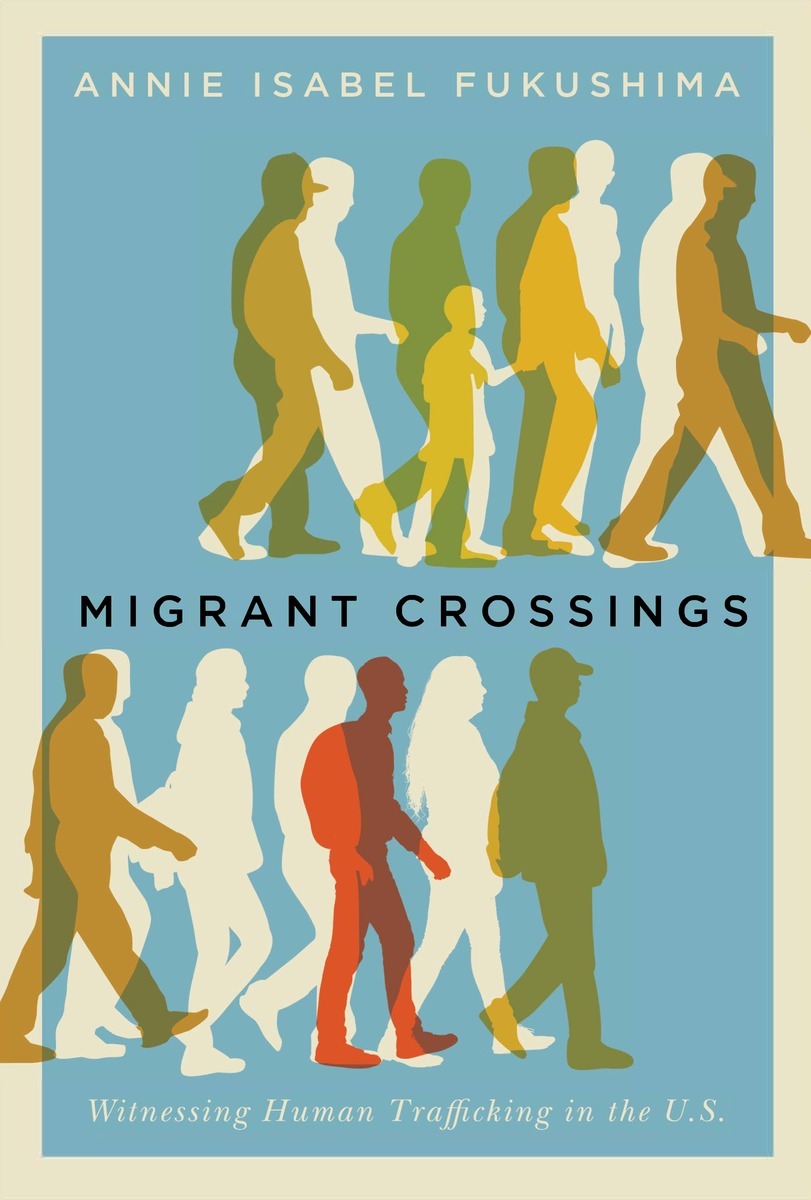
“Migrant Crossings brilliantly dissects our understandings of the plight of Latina and Asian women trafficked into informal economies of sex and service. Combining original analysis of court cases, news accounts, and police reports with the author’s experience as a volunteer counselor, Fukushima reveals a legal system that requires a survivor’s story to fit the model of ‘perfect victimhood’ in order to cross into visibility and be deemed worthy of asylum.” —Evelyn Nakano Glenn, University of California, Berkeley
“Migrant Crossings critically examines the framing and impact of the U.S. anti-human trafficking movement. Annie Fukushima explores how our work in the movement is often at odds with our stated objectives and reveals how an individual’s experiences are shaped by a racist, misogynistic, and colonialist history. A deeply important read for all of us working to realize the promise of human rights.” —Jean Bruggeman, Executive Director, Freedom Network USA
“Migrant Crossings offers a deeply insightful analysis of the structures of human trafficking. It illustrates linkages between labor migration and human trafficking while convincing readers that vulnerability to human trafficking belongs in a historical continuum of U.S. racial exclusion.” —Rhacel Salazar Parreñas, author of Servants of Globalization: Migration and Domestic Work
Migrant Crossings: Witnessing Human Trafficking in the U.S. is the 2020 recipient of the American Sociological Association’s Section on Asia and Asian America’s Book Award on Asian America. I was also an Honoree for Migrant Crossings: Witnessing Human Trafficking in the U.S., for the 5th Annual Celebrate U Event, A Showcase of Extraordinary Faculty Achievements, The Celebrate U Task Force, University of Utah.
Reviews of Migrant Crossings
- Ceron-Ananya, H. (2020). Book Review: Migrant Crossings: Witnessing Human Trafficking in the US, Humanity & Society, 44(2), 237 – 239.
https://doi.org/10.1177/0160597620914447 - Adanalian, V. “Migrant Crossings: Witnessing Human Trafficking in the US by Annie Isabel Fukushima (review). Human Rights Quarterly 42, no. 3, August 2020, pp. 715 – 717. 10.1353/hrq.2020.0027
- Majic, S. “Migrant Crossings: Witnessing Human Trafficking in the US by Annie Isabel Fukushima (review).” Contemporary Sociology: A Journal of Reviews 50, no. 5, 2021, pp. 408- 410. https://journals.sagepub.com/doi/abs/10.1177/00943061211036051i
- Shih, E. “Migrant Crossings: Witnessing Human Trafficking in the U.S. By Annie Isabel Fukushima. Palo Alto, Calif.: Stanford University Press.” American Journal of Sociology 127, no. 3, 2021, pp. 1007 – 1009. https://doi.org/10.1086/716574







Articles and Book Chapters
Peer-Review Articles
Fukushima, A.I., Nilson, J.,* & Richards, K.* (2024). Seeing Race & Sexuality: Child Welfare & Forced Labor. Arkansas Law Review 77, 2: 283 – 312. https://scholarworks.uark.edu/cgi/viewcontent.cgi?article=1252&context=alr
Fukushima, A.I., Franchek-Roa, K., and Salari, S. (2024). Interpersonal Violence. In C. Frost, L. Johnston, K. Digre, The 7 Domains of Health: Multidisciplinary Considerations of Women’s Health in the 21st Century Special Issue Utah Women’s Health Review October 20 https://uwhr.utah.edu/interpersonal-violence/
Fukushima, A.I., Gaytán, M. S., & Alvarez Gutiérrez, L. (2023). Death world economy: Race, Meat – processing plants, and COVID-19. Environment and Planning C: Politics and Space, 0(0). https://doi.org/10.1177/23996544231208196
Fukushima, A.I. (2023). A Multiplicity of Selves-in-Coalition: A Decolonial Feminist Witnessing Through Autoethnography. Feminist Formations 35(1). https://muse.jhu.edu/issue/51269
Fukushima, A.I., Alvarez Gutiérrez, L., Gaytan, M.S. (2023). Liminalities and Possibilities: Latinx Pedagogies and Praxis in Pandemic Times. In Ryan, J.M., (Ed) Pandemic Pedagogies: Teaching and Learning during the COVID-19 Pandemic. https://www.routledge.com/Pandemic-Pedagogies-Teaching-and-Learning-during-the-COVID-19-Pandemic/Ryan/p/book/9781032348438
Fukushima, A.I. (2023). Gender-Based Violence. In S. Salari (Eds), Family Violence and Abuse: An Encyclopedia of Trends, Issues, and Solutions, Bloomsbury, https://www.bloomsbury.com/us/family-violence-and-abuse-2-volumes-9781440871405/ pp 263-266.
Fukushima, A.I. (2023). Human Trafficking. In S. Salari (Eds), Family Violence and Abuse: An Encyclopedia of Trends, Issues, and Solutions, Bloomsbury, https://www.bloomsbury.com/us/family-violence-and-abuse-2-volumes-9781440871405/ pp. 303-305.
Fukushima, A.I. and Vei, T.* (2022). Decolonial Feminist Pedagogies: Entering into the ‘World’ of the Zombie as Praxis. International Journal of Qualitative Studies in Education. https://doi.org/10.1080/09518398.2022.2025489
Strain, D.L.*, DeBetta, L., & Fukushima, A.I. (2022). Utah Women’s Narratives: Narrative, Performance, and Collaboration. Frontiers: A Journal of Women Studies 43(3), 117-132. doi:10.1353/fro.2022.0026.
Fukushima, AI. (2022). Utah Statewide Needs Assessment: Domestic Violence, Sexual Violence and Human Trafficking – 2022 Report. Gender-Based Violence Consortium, University of Utah. Republished in Utah Women’s Health Review, Women and Violence, doi: 10.26054/0d-wpgq-gnf1
Fukushima, A.I., Lukasinski, V.*, and Gonzalez-Pons, K.* (2022). The Coordinated Community Response to Non-Fatal Strangulation in Intimate Partner Violence: A Pilot Program. Utah Violence Against Women. Utah Women’s Health Review. https://uwhr.utah.edu/the-coordinated-community-response-to-non-fatal-strangulation-in-intimate-partner-violence-a-pilot-program/
Love, D. A., Fukushima, A. I., Rogers, T. N., Petersen, E.,* Brooks, E.,* & Rogers, C. R. (2021). Challenges to Reintegration: A Qualitative Intrinsic Case Study of Convicted Sex Traffickers. Feminist Criminology 18(1): 24 – 44, https://doi.org/10.1177/15570851211045042
Salari, S., Talboys, S., Fukushima, A.I., Melton, H., Seage, M., Petersen, M. (2021). Multi-method Examination of Elder Mistreatment in the Age of COVID-19. Innovation in Aging. Volume 5, Issue Supplement_1, 2021, Page 766, https://academic.oup.com/innovateage/article/5/Supplement_1/766/6467767?login=false
Fukushima, A.I., Hill, A., and Suchland, J., Eds. (2021). Editorial: Anti-Trafficking Education: Sites of care, knowledge, and power. Anti-Trafficking Review 17, pp. 1 – 19. https://www.antitraffickingreview.org/index.php/atrjournal/article/view/573/424
Fukushima, A.I. (2020b). “Food Matters: Trafficked Transnational Migrant Experiences and the Matrix of Food (In)Security.” Journal of Human Rights Practice. https://academic.oup.com/jhrp/advance-article/doi/10.1093/jhuman/huaa024/5861736?guestAccessKey=78647d96-58a7-44d6-a364-7900b870b572
Fukushima, A.I. (2020a). “Witnessing in a Time of Homeland Futurities.” Anti-Trafficking Review, Technology, Anti-Trafficking, and Speculative Futures, Musto, J. and Thakor, M., (Guest Editors), Gerasimov, B. (Editor). https://www.antitraffickingreview.org/index.php/atrjournal/article/view/445/358
Fukushima, A.I., Gonzalez-Pons, K.,* Gezinski, L., & Clark, L. (2020). “Multiplicity of Stigma: Cultural Barriers in Anti-Trafficking Response.” International Journal of Human Rights in Healthcare. https://doi.org/10.1108/IJHRH-07-2019-0056
Fukushima, A.I., & Heffernan, K. (2020). “What’s the Mission? Discursive Power and Human Rights Based Language in Anti-Trafficking Organizations.” Journal of Human Rights & Social Work. https://doi.org/10.1007/s41134-019-00109-w
Gutiérrez, LA, Fukushima, A.I., Gaytán, M.S., (2020). “Essential Latinx Educators: Teaching in a Time of Pandemic,” Latinx Talk, https://latinxtalk.org/2020/07/06/essential-latinx-educators-teaching-in-a-time-of-pandemic/?fbclid=IwAR1lnvonuJMrBzJnpFBFoS1YuHRYb3AispIYsuc2TeaHCBz7Jk6OvPTQkd8
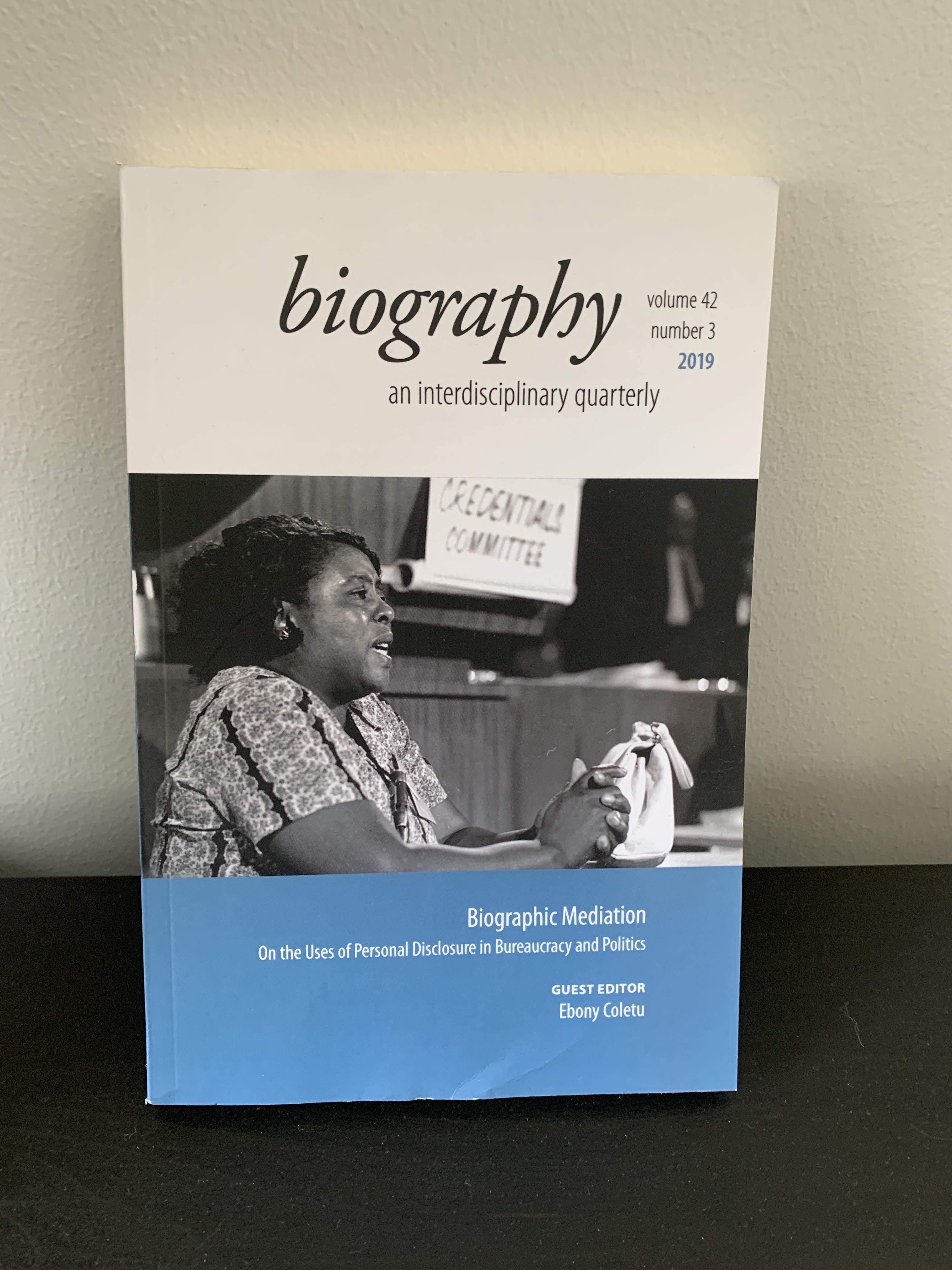
Fukushima, A.I. (2019). “Has Someone Taken Your Passport? Everyday Surveillance of the Migrant Laborer as Trafficked Subject.” Biography. Special Issue: Biographic Mediation: The Uses of Disclosure in Bureaucracy and Politics, Vol. 42, no. 3, pp. 561-585.
https://muse.jhu.edu/article/742992
Fukushima, A.I. (2019). “Fisheries, Farms, and Factories: Human Trafficking and Tethered Subjectivities from Asia to the Pacific.” In C. Schlund-Vials, H. Lee, and G. Beauregard (Eds), The Subject(s) of Human Rights: Crisis, Violations and Asian/American Critique. Publisher: Temple University Press, pp. 44 – 60.
Fantone, L. & Fukushima, A.I. (2018). Desires of Belonging and Betrayals: Narratives of “coming out” and the Terms of Recognition in (Un)Documented Migrants (Parisis, R. Ed.). Annuale di Scienze Umane diretto da Luigi M. Lombardi Satriani. Special issue of sexuality: 30 – 55.
Fukushima A.I. (2017). “Human Trafficking.” Macmillan Interdisciplinary Handbooks, Gender: War. Farmington Hills, MI: Macmillan Reference, USA.
Fukushima, A.I. (2016). An American Haunting: Unsettling Witnessing in Transnational Migration, the Ghost Case, & Human Trafficking (W.S. Hesford and R. Lewis, Eds). Feminist Formations, Special issue, Mobilizing Vulnerability: New Directions in Transnational Feminist Studies & Human Rights 28(1): 146 – 165.
Fukushima, A.I. (2015). Anti-Violence Iconographies of the Cage: Diasporan Crossings and the (Un)Tethering of Subjectivities (R. Chevrette, C. Keating, A.H. Koblitz, K. Kuo, C.T. Lee, and H. Switzer, Eds.). Frontiers: A Journal of Women’s Studies for the Special Issue on Transnational Feminisms 36(3): 160 – 192.
Fukushima, A.I. & Hua, J. (2015). “Calling the Consumer Activist, Consuming the Trafficking Subject: Call and Response and the Terms of Legibility.” In L. Cuklanz and H. McIntosh (Eds.), Documenting Gendered Violence (pp. 45 – 66). New York, New York: Bloomsbury Publishing.
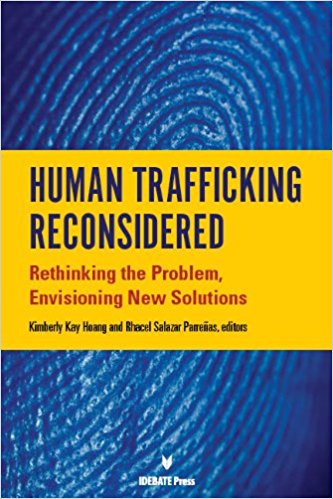
Fukushima, A.I. (2014). “Beyond Supply & Demand: The Limitations of End Demand-Strategies.” In K.K. Hoang and R.S. Parrenas (Eds.), Human Trafficking Reconsidered: Rethinking the Problem, Envisioning New Solutions (pp. 91 – 101). International Debate Education Association.
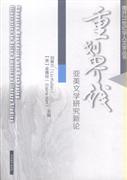
Fukushima, A.I. (2014). “‘The Jammed’: Representational Politics and Racialized Narratives of the Trafficked Asian Diaspora.” In K. Liu and J. Huijing (Eds.), Changing Boundaries and Reshaping Itineraries in Asian American Literary Studies. China.
Fukushima, A.I. (2014). Anti-miscegenation laws; Mixed race/ethnicity Intimate relations; Domestic violence; and LGBT communities. In C.A. Gallagher and C.D. Lippard (Eds.), Race and Racism in the United States: An Encyclopedia of the American Mosaic (pp. 63 – 64; pp. 366 – 368). Santa Barbara, California: ABC-Clio/Greenwood Press.
Fukushima, A.I. (2013). Korean Immigrant Women in America; Role of Asian Americans in Anti-Human Trafficking Movement; Asian Americans and the Comfort Women Issue. In E.J.W. Park and X. Zhao, Eds. Asian Americans: An Encyclopedia of Social, Cultural, Economic, and Political History (pp 709 – 712; pp. 68 – 70; pp. 330-333). California: ABC-Clio.
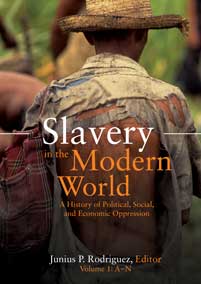
Fukushima, A. (2011). Coercion and Migration. In J.P. Rodriguez (Ed.), Slavery in the Modern World: A History of Political, Social and Economic Oppression (pp. 17 – 33). Santa Barbara, California: ABC-CLIO, LLC.
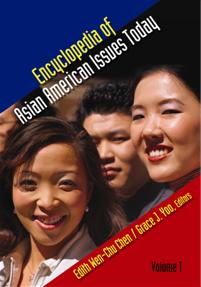
Fukushima, A. (2009). Comfort Women. In E. Chen and G. Yoo (Eds.), The Greenwood Encyclopedia of Contemporary Asian American Issues Today. Connecticut: Greenwood Press, 2009.
Fukushima, A. (2008). Coerced Migration. In J. Warner (Ed), Battleground: Immigration. Connecticut: Greenwood Press.
Fukushima, A. (Fall 2008). Beyond Moments of Disjuncture: The Visual Culture of the Sex Trafficked Asian (Woman). Praxis (formerly Phoebe): Gender & Cultural Critiques 20, No. 2: 15 – 34.
Peer-Review Special Issues, Editor
Fukushima, A.I., Hill, A., and Suchland, J., Eds. (Forthcoming, 2021). “Anti-Trafficking Education: Sites of Care, Knowledge, & Power.” Anti-Trafficking Review. https://www.antitraffickingreview.org/index.php/atrjournal/announcement/view/27
Fukushima, A.I., Maese, M. Alarcon, W., Benfield, D.M., Eds. (2020). “World-Making and World-Traveling with Decolonial Feminisms and Women of Color.” Special Issue. Frontiers: Journal of Women Studies 41, 1. https://muse.jhu.edu/issue/42309
Accepted peer-review book chapters
Benfield, D.M & Fukushima, A.I. (Accepted, Submitted 2018). “Eight Scenes of Decolonial Feminist Aesthetic Praxis in Migratory Times.” In Decolonial Feminisms. Lugones, M. Ed.Publisher: Duke University Press.
General Interest
Fukushima, A.I.and Savelsberg, J.J.(2020). The Sociology of Human Rights and COVID-19. Footnotes: A publication of the American Sociological Association 48, 3, https://www.asanet.org/news-events/footnotes/may-jun-2020/research-policy/sociology-human-rights-and-covid-19
Fukushima, A.I. (2020). A Survey of Child Welfare and Labor Trafficking in California: A White Paper. Utah: University of Utah. Published, 01/20/2020.
https://bit.ly/childwelfarewhitepaper
Lugo, L.* and Fukushima, A.I. (2019). “Latino Work Experiences in Utah.” Comunidades Unidas and University Neighborhood Partners.
Fukushima, A.I. (2019). “Freedom Network Training Institute Housing Training and Technical Assistance Project Evaluation.” Office of Justice Programs. Grant no. 2017-VT-BX-K018.

Benfield, D.M., Fukushima, A.I., Critcal Dias, At Land’s Edge, Dizon, M., Kaisen, J.J., Vazquez, R., Dumesnil, C., Lockward, A., Jorgensen, S.H., & Daly, T. (2019). “Translating Geographies of Displacement.” Migratory Times. Design: Omnivore. Website: migratorytimes.net. Web.
Fukushima, A.I., Gonzalez-Pons, K., O’Connor, A., Clark, L., & Gezinski, L. (2018). “Addressing the Needs for Survivors of Human Trafficking in Salt Lake City: A White Paper.” Salt City Mayor’s Office, the Salt Lake City Council, the Salt Lake County District Attorney’s Office.
Fukushima, A.I., Gezinski, L., & Boley, E. (2018). “Violence Against Women Community Needs Assessment: Report, July 2018.” San Francisco, California, Department on the Status of Women.

Morris, K. & Fukushima, A. (2018). Grant Management Toolkit: Building Sustainable Anti-Trafficking Programs. Office on Trafficking in Persons: Administration for Children & Families and the National Human Trafficking Training & Technical Assistance Center. February 2018.

Fukushima A.I., Guest Contributor. (2016) “Why should human trafficking be countered through a critical human rights approach?” In John Vanek (Ed.), The Essential Abolitionist: What You Need to Know About Human Trafficking & Modern Slavery.
Co-authored with Ayano Ginoza, Michiko Hase, Gwyn Kirk, and Taeva Shefler, “Disaster Militarism: Rethinking U.S. Relief in the Asia-Pacific” (Washington, DC: Foreign Policy In Focus, March 11, 2014). Accessible at FPIF. Republished with Asia Times Online, and the Nation.
Co-authored with Gwyn Kirk, “Military Sexual Violence: From Frontline to Fenceline” (Washington, DC: Foreign Policy In Focus, June 17, 2013). Also accessible on Alternet and FPIF
Co-authored with Cindy C. Liou, (2012). “Weaving Theory and Practice: Anti-Trafficking Partnerships and the Fourth ‘P’ in the Human Trafficking Paradigm.” Human Trafficking is Global Slavery. Program on Human Rights, Center on Democracy, Development, and the Rule of Law Freeman Spogli Institute for International Studies. http://iis-db.stanford.edu/pubs/23750/Liou%26Fukushima_Final_06_12.pdf.
Co-authored with Ellen-rae Cachola, Lizelle Festejo, Annie Fukushima, Gwyn Kirk, and Sabina Perez. “Gender and U.S. Bases in Asia-Pacific” (Washington, DC: Foreign Policy in Focus, March 14, 2008). Accessible at FPIF.
Editorial
Co-Editor, Institute for Impossible Subjects, 2013 –
Co-Editor, Third Woman Press, 2013 –
 Annie Isabel Fukushima